
Round-robin lead routing for Indian sales teams: a practical guide
Round-robin lead routing for Indian sales teams
Most Indian sales teams we meet still assign inbound leads in one of two ways: a manager forwards a WhatsApp screenshot to whoever is "free", or the first agent to spot the email in a shared inbox grabs it. Both look harmless. Both cost you 30-60% of your pipeline.
Why the "first to grab" model fails in India
- Working hours are messy. Tier-2 leads come in at 10:30 PM. Your senior closer is offline. The junior who picks it up is not briefed. The lead never converts.
- Strong agents hoard. The top two reps cherry-pick warm leads; the rest of the team starves; attrition follows.
- Nobody owns the SLA. When a lead goes cold, there is no clean answer to "who was supposed to call this person?"
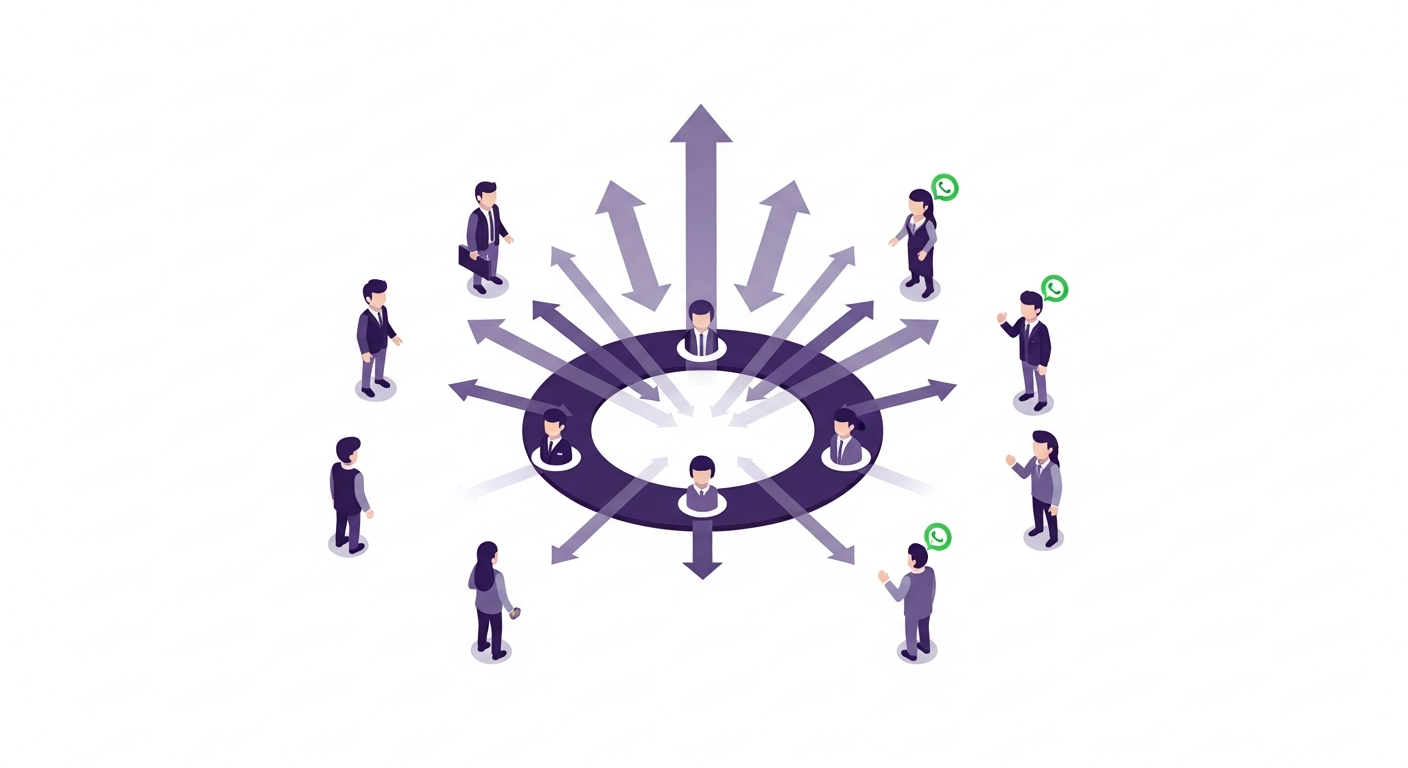
Round-robin solves the ownership problem. Done well, it also gives you a clean dataset for coaching and forecasting.
Five rules that make round-robin actually work
1. Weight the rotation, do not equalise it
Equal rotation is fair to agents, not to leads. A new joiner should not get the same volume of high-intent leads as your top performer in their first month. In Leads Rubix, every agent gets a weight (1-10). The pointer advances by weight, not by one. Same audit trail, fairer outcome.
2. Have a business-hours fallback
After 8 PM and on Sundays, route everything to a single "after-hours" pool with auto-reply: "Thanks, a senior advisor will call you tomorrow before 11 AM." That single line buys you trust and stops night leads from being silently dropped.
3. Re-route on no-touch within 15 minutes
If the assigned agent has not logged a call, WhatsApp, or status change in 15 minutes, the lead jumps to the next agent. You will be surprised how often this fires in week one and how quickly it stops firing in week three.
4. Treat WhatsApp replies as a touch
Half of Indian B2B follow-ups happen on WhatsApp. If your CRM only counts dialled calls as "touched", you will re-route leads that the agent is actively working. Let the WhatsApp click count.
5. Publish the leaderboard, but only on response time
Public dashboards on revenue create politics. Public dashboards on median first-response time create healthy competition. Show the second one in the weekly all-hands; keep the first one in the manager's tab.
What to measure in week one
| Metric | Healthy range |
|---|---|
| Median first-response time | under 5 minutes (in business hours) |
| Leads with zero touches in 24 hours | under 2% |
| Re-route rate (no-touch fallback fired) | under 10% by week 3 |
| Agent CV of lead volume | under 0.25 |
If your re-route rate stays above 20% past week three, the problem is not the rule, it is coverage.
Common mistakes
- Routing by source instead of by skill. Source-based routing ("all Facebook leads to Rohan") looks tidy on paper but breaks the moment Rohan takes leave.
- Leaving managers in the rotation. Managers should be escalation-only, not absorbing first calls.
- No round-robin on re-engagement. Cold leads that come back deserve the same routing discipline as fresh ones.
Round-robin is not a magic feature, it is a discipline. Pair it with a 5-minute SLA, treat WhatsApp as a real touch, and you will close more leads next quarter without hiring a single new agent.
If you want to see how this looks in practice, book a 20-minute walkthrough and we will set up your rotation rules live on a demo workspace.
Get the WhatsApp + lead-routing playbook
We'll email you the templates and rule examples we set up with our highest-converting Indian customers.
By submitting you agree to our privacy policy. We'll only use your details to respond to this enquiry.